
"There is bound to be revision," the top court said, "otherwise, how will the poll panel delete the names of those who are dead, migrated or shifted to other constituencies?"
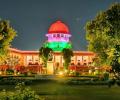
The Centre told the Supreme Court that governors are not indefinitely sitting on bills passed by state legislatures, and that barring a few exceptions, most have acted in a way which the apex court would have perhaps desired. Solicitor General Tushar Mehta argued that a Governor is "not a rubber stamp" and has a duty to preserve, protect, and defend the Constitution.

The Supreme Court has directed the Election Commission to provide details regarding the approximately 65 lakh voters removed from the draft electoral rolls in Bihar, a state preparing for elections. The court's order comes in response to a petition filed by an NGO challenging the Election Commission's Special Intensive Revision of electoral rolls.

BJP-ruled states argued in the Supreme Court that governors and the President have autonomy in assenting to bills passed by state assemblies, asserting that courts cannot mandate assent.

The Supreme Court of India will hear a batch of pleas seeking a probe into the alleged unauthorised use of Pegasus spyware for the surveillance of journalists and others next week. The court had previously ordered a technical panel to investigate the matter but received no reports. Senior advocate Shyam Divan, appearing for some petitioners, urged the court to pass directions as the reports were not shared. The court has now listed the matter for hearing on April 29.
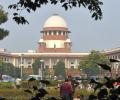
The Supreme Court is hearing arguments regarding a presidential reference on whether fixed timelines can be imposed on governors and the president for acting on bills passed by state legislatures. The court is considering objections to the maintainability of the reference under Article 143 of the Constitution.
The Supreme Court has directed the Maharashtra state election commission to notify local body elections in the state within four weeks. The court also ruled that the contentious issue of OBC reservation in local body polls will be as it existed prior to the 2022 Banthia Commission report. The court accepted the commission's report, which recommended a census to fix exact data on OBCs and reserve 27 per cent seats for the category in local body polls in Maharashtra. The bench on Tuesday fixed a timeline for concluding the local body polls and asked the state panel to conclude it in four months. The outcome of Maharashtra local body elections would be subject to decisions in pending petitions before the apex court.

The Supreme Court would likely hear on Wednesday a plea of Ashoka University's faculty Ali Khan Mahmudabad against his arrest for his social media posts over Operation Sindoor.

The Supreme Court has put on hold the Uttar Pradesh government's plan to develop the Shri Banke Bihari Temple Corridor in Vrindavan, citing a lack of consultation with key stakeholders. The court questioned the state's approach and the urgency of enacting an ordinance to take over the temple's management.
The Supreme Court has ruled that a Governor cannot send bills to the President for consideration if the state assembly has already cleared them for a second time. The court was questioning the Centre over the powers of the Governor when it comes to granting assent to bills.

'Judges have transmitted a terrible message to citizens across the nation. All right-thinking individuals will be disturbed by what the Delhi high court judges have done.'
The bench, which examined the online post by the professor, who heads the political science department in the Sonipat-based Ashoka University, questioned his choice of words, saying they were used deliberately to humiliate, insult, or put others in discomfort. "The choice of words are deliberately made to insult, humiliate or cause discomfort to others. The professor, who is a learned person cannot lack a dictionary... he could have conveyed the very same feelings in a simple language without hurting others. He should have shown respect for the sentiments of others. He could have used a simple and neutral kind of language, respecting others," Justice Kant said.
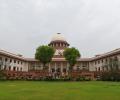
The Supreme Court of India has laid down guidelines for courts when ordering DNA tests to ascertain paternity. The court emphasized the need to balance the interests of all parties involved, including the child, parents, and other stakeholders. It also recognized the potential for infringement of privacy and the social stigma associated with illegitimate children. The court stressed that DNA tests should only be ordered when existing evidence is insufficient and when such tests are in the best interests of all parties involved.
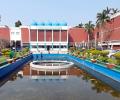
A two-judge bench of the top court in 1981 questioned the correctness of the 1967 verdict holding Aligarh Muslim University not to be a minority institution since it was created by a central law and referred the issue to a larger bench for decision.
The Supreme Court declined to examine a plea challenging a PMLA provision, stating the issue lies in the law's abuse, not the law itself. The court allowed the petitioner to approach the High Court if procedures weren't followed.

IT major Tata Consultancy Services (TCS) has made changes to its leadership roles in North America. As part of the changes Suresh Muthuswami has been elevated to the role of chairman, North America, said sources in the know. This is one of the most significant leadership changes the company has announced for the region. The reason for the changes in the North American region, the largest in terms of revenue for TCS, is because Surya Kant who has been at the helm of North America for the past 16 years is stepping down by the end of the fiscal year, as he retires.
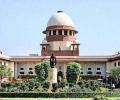
The Supreme Court of India has scheduled a hearing on February 19 for pleas challenging the appointment of the Chief Election Commissioner and Election Commissioners under the 2023 law. The court emphasized the potential consequences if any action is taken before the hearing. The pleas argue that the 2023 law, which excludes the Chief Justice of India from the selection panel, undermines the independence of the Election Commission and allows for undue influence from the executive branch. The court's earlier verdict in March 2023 called for an independent selection panel comprising the Prime Minister, Leader of the Opposition, and the Chief Justice of India to ensure the integrity of the Election Commission. The case highlights concerns about the independence of India's electoral process and the potential for political influence in the appointment of key election officials.
The Tamil Nadu government has urged the Supreme Court to dismiss the Presidential reference concerning the Governor's powers to assent to bills, arguing it is an 'appeal in disguise' to overturn settled law.

The committee said the Uttar Pradesh government did not file appeals against the high court's November 8, 2023 order and instead, an impleadment application was filed in the pending plea before the top court.
The Supreme Court has sought the assistance of the solicitor general of India in a plea that seeks job security for members of internal complaint committees (ICC) for sexual harassment at workplaces. The court recognized the importance of the plea and expressed concern over the lack of response from the Central government, despite issuing notice. The petitioners, Janaki Chaudhry and Olga Tellis, argue that ICC members in the private sector face a serious conflict of interest as they can be terminated without reason if a decision goes against the senior management. The petition highlights the vulnerability of ICC members to retaliation and the lack of protection they have compared to their counterparts in the public sector.

Podcaster Allahbadia's remarks on parents and sex on comedian Samay Raina's YouTube show 'India's Got Latent' triggered a controversy and several FIRs have been lodged against him and others in various parts of the country.
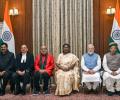
The Supreme Court's opinion on the presidential reference can impact on any number of cases if and when governors, if not the President, take a literary view of the Supreme Court's 'ppinion' on their 'discretionary powers' without reference to the rider on 'reasonable time', points out N Sathiya Moorthy.
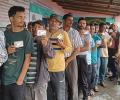
The Election Commission has assured the Supreme Court that no voter's name will be deleted from the draft electoral roll in Bihar without prior notice and a fair hearing. The EC also clarified that it is not required to share separate lists of those not included in the draft rolls.
The Centre has told the Supreme Court that imposing fixed timelines on governors and the president to act on bills passed by a state Assembly would amount to one organ of the government assuming powers not vested in it by the Constitution and lead to a "constitutional disorder".

Observing that there is a trust deficit between farmers and the government, the Supreme Court on Wednesday proposed constitution of an independent committee comprising eminent persons to reach out to the protesters to find a solution to their demands.
The Supreme Court of India has dismissed a petition filed by an NGO challenging the construction of a renewable energy project at the Jayakwadi Dam in Maharashtra. The court criticized the NGO for opposing the project, stating that it would be detrimental to the country's progress if every project was resisted. The court also raised questions about the NGO's bona fides and funding, suggesting that it may have been influenced by a company that lost the tender for the project. The project, a floating solar power plant, was approved by the National Green Tribunal (NGT) and the Ministry of Environment, Forests and Climate Change. The NGT had previously dismissed the NGO's plea, stating that it could not find any law prohibiting such activities in the eco-sensitive zone. The Supreme Court upheld the NGT's decision, finding no grounds to interfere.

A bench of Justices Surya Kant and Joymalya Bagchi is likely to take up the matter in which the EC has justified its ongoing SIR of electoral rolls in Bihar, saying it adds to the purity of the election by "weeding out ineligible persons" from the electoral rolls.
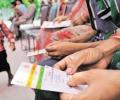
Expressing surprise over political parties not coming forward in filing objections related to 65 lakh excluded voters, the top court directed the chief electoral officer of Bihar to implead them in the court proceedings.

Gurindervir, Kujur, Manikanta, Amlan set new 4x100m relay national record

The Supreme Court on Thursday upheld the constitutional validity of Section 6A of the Citizenship Act related to the grant of Indian citizenship to illegal immigrants in Assam by a majority verdict of 4:1.
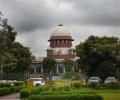
A five-judge Constitution bench of the Supreme Court is scheduled to consider the Presidential reference on whether timelines could be imposed by judicial orders for the exercise of discretion by the President while dealing with bills passed by state assemblies.
The Supreme Court of India harshly criticized a man for abandoning his wife and minor daughters, calling his actions "cruel" and questioning his humanity. The court demanded the man provide financial support to his family, including his daughters, before it would consider any favorable orders in his case. The man had previously been convicted of domestic abuse and fraudulently removing his wife's uterus. The court's strong stance highlights the ongoing issue of domestic violence and the need for legal protection for women and children in India.
The Supreme Court of India granted custody of a man suffering from cerebral palsy to his mother, a US national, after determining it was in his best interest due to his inability to make independent decisions. The court overruled a Madras High Court decision, finding the lower court's interaction with the son insufficient to assess his needs. The Supreme Court emphasized the son's limited cognitive capacity and the availability of specialized support in the US, where he had completed most of his schooling.

The Supreme Court of India has extended the interim bail of Ashoka University professor Ali Khan Mahmudabad, who was arrested for contentious social media posts on Operation Sindoor. The court, however, restrained him from posting anything online with respect to the cases against him, stating that there was no impediment on his right to speech and expression. The court directed the Special Investigation Team (SIT) to furnish the investigation report on the next date of hearing.
The four names cleared by the government are justices Aniruddha Bose, A S Bopanna, B R Gavai and Surya Kant.

The Supreme Court has questioned the practice of Governors withholding assent to bills indefinitely, stating that it renders the constitutional provision of 'as soon as possible' meaningless.

Chandrachud said it should be ensured that courts provide safe and accommodating environment for all members of the society.
The Supreme Court will hear a plea seeking an independent selection process for the Comptroller and Auditor General of India (CAG) on March 17. The PIL, filed by the Centre for Public Interest Litigation, argues that the current system of appointment solely by the executive and the prime minister violates the Constitution and undermines the CAG's independence. The petition calls for a transparent process involving the prime minister, Leader of the Opposition, and Chief Justice of India. The PIL contends that the CAG's role as a watchdog over government finances requires a fair and non-arbitrary appointment procedure.

Ahead of the Maharashtra assembly elections, veteran leader Sharad Pawar led faction moved the Supreme Court on Friday seeking that both factions of the Nationalist Congress Party (NCP) be given new poll symbols.

The Supreme Court on Monday ordered an SIT investigation into the alleged torture of a woman in police custody following her arrest over protests against the rape and murder of a doctor at R G Kar Medical College and Hospital in Kolkata.
